Why Chapultépec Castle matters: one building, five lives
A country house on a hill that already had a name
Building started in 1785, as a summer retreat for the Spanish viceroys, on a hill the Nahuatl speakers had named long before anyone arrived with drawings: chapulin and tepetl, grasshopper and hill, which I unpack on what Chapultépec means. That sequence matters. The hill made the castle possible, not the other way round — it is the one piece of high ground in the middle of the valley, with water at its foot and the whole city in view.
The Military College and September 1847
By the 1840s the building was Mexico’s military academy, which is how a country house came to be a battlefield. On 12 and 13 September 1847, during the Mexican–American War, US forces took the hill. Six teenage cadets died defending it, and they are remembered as the Niños Héroes; the fuller account, including what historians dispute, is on the Niños Héroes page. The US Marines took their “Halls of Montezuma” line from this hill, which is one of those facts that lands differently depending on which side of the border you grew up.
The empire: Maximilian and Carlota
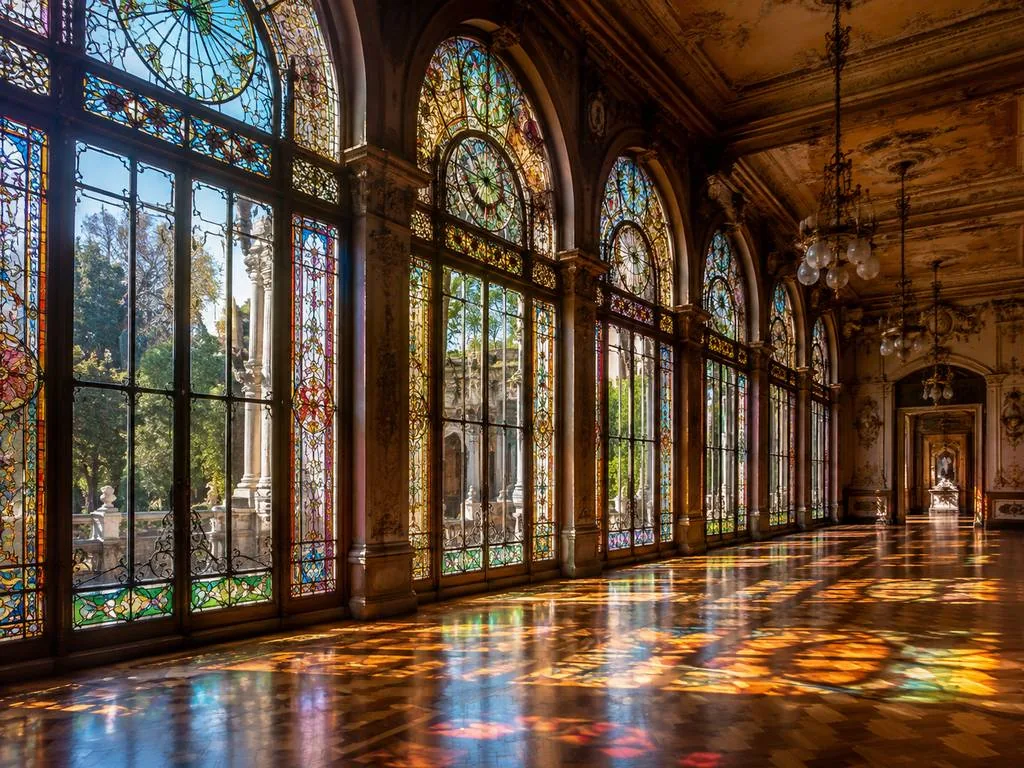
In the 1860s the castle became an imperial residence. Maximilian of Habsburg and his wife Carlota lived here during the Second Mexican Empire, and they are the reason the Alcázar apartments look the way they do — furnished rooms, stained glass, a roof garden, a terrace looking straight down the avenue they had cut through the city so the emperor could ride to work. Plenty of buildings in the Americas call themselves castles. This is the only one where a crowned head actually slept.
The presidential years, and the day it stopped being a home
After the empire collapsed the republic kept the address. Presidents of Mexico lived on the hill until 1939, when Lázaro Cárdenas moved out and converted the castle into the Museo Nacional de Historia. That is the twist most visitors miss: the building was somebody’s house within living memory of their grandparents, and it was given away deliberately. The murals you walk past on the upper floor were commissioned for a country working out what it wanted its own story to be.
What survives, and what you need to bring with you
The furnished apartments, the carriage, the stained glass, the murals, the terrace and the Niños Héroes room are all still there. What is not there is the connective tissue — the labels tell you what an object is, rarely why it is standing in that room. That gap is the whole argument of do you need a guide, and it is a real argument rather than a sales pitch, because the entry ticket is cheap and the understanding is the expensive part.
Read the four dates before you climb: 1785, 1847, the 1860s, 1939. Four numbers turn a handsome building into a country arguing with itself, and they take a minute to learn.
See it with someone who knows the sequence
The pairing I recommend most is the castle with the Museo Nacional de Antropología in the same section of the park — the options are compared on castle and museum combos.
Frequently asked questions
Why is Chapultépec Castle famous?
Because it is the only castle in the Americas to have housed reigning sovereigns — Maximilian I and Carlota in the 1860s — and because US forces stormed the hill in 1847 when it held the Military College. It has been the Museo Nacional de Historia since 1939.
Who lived in Chapultépec Castle?
Spanish viceroys used it as a country house from 1785, cadets of the Military College occupied it in the 19th century, Emperor Maximilian and Empress Carlota lived here in the 1860s, and Mexican presidents until 1939.
Why was Chapultépec Castle built?
It began in 1785 as a viceregal retreat on the hill above the springs that supplied the city. The name of the hill is older than the building — see what Chapultépec means.
What happened at Chapultépec Castle in 1847?
US forces stormed the hill on 12 and 13 September during the Mexican–American War, and six teenage cadets died defending it. The full account is on the Niños Héroes page.